
Plan your fall pool inspection in Austin, San Antonio, and Central Texas. Check equipment concerns, water loss, barriers, and cold-weather readiness.

Sep 25, 2026
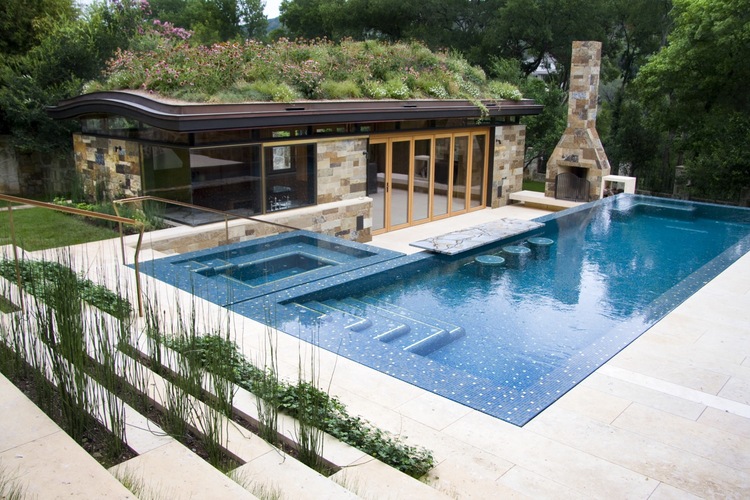
Fall is a useful time to take stock of your pool: what worked well through summer, what needs attention, and what your equipment will need when colder weather arrives. A clean surface alone does not answer those questions.
For homeowners in Austin, Buda, Kyle, San Marcos, New Braunfels, and San Antonio, this checklist can help organize a professional pool inspection. It is a starting point for observations and questions, not a do-it-yourself repair or winterization procedure.
Think back over the past few months. Has the pump become noisier? Does the heater show an error message? Have you noticed drips around accessible equipment or controls that no longer respond consistently?
Write down when a symptom occurs and photograph visible conditions from a safe location. An intermittent problem can be easier to discuss when you can describe its pattern. Avoid opening electrical enclosures, loosening pressurized filter components, or repeatedly resetting a tripping breaker. Those conditions need a qualified professional.
If you have been adding water more often, keep a record of refill frequency, rainfall, swimming activity, and automatic-fill use. A changing water level is a reason to investigate, not proof of a particular leak.
A pool inspection and a dedicated water-loss test answer different questions. Ask whether computerized leak detection should be included or scheduled separately. Measuring water loss and locating its precise source are not necessarily the same step; confirm the scope before assuming underground plumbing has been fully evaluated.
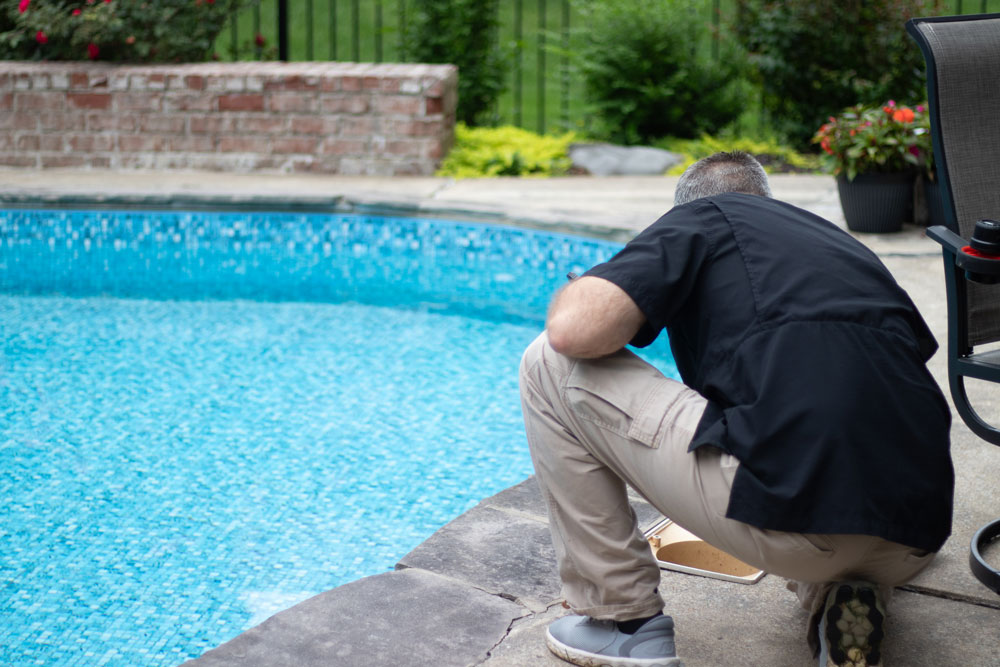
Walk the accessible deck and note loose coping, damaged tile, changes in visible cracking, or a ladder or handrail that feels unstable during normal use. Share dated photos of changes with the inspector instead of assuming their cause.
Keep routine cleaning and water care on the schedule even when swimming slows down. Let your service professional know about persistent debris, unusual staining, or a change in circulation. Inspection findings can help identify the next evaluation needed, but they do not replace ongoing maintenance.
Fewer swimmers does not mean access protection can be ignored. Check that gates close and latch, and report damaged fencing, nonfunctioning alarms, or concerns with a cover. Do not prop a pool gate open for convenience.
The U.S. Consumer Product Safety Commission's Pool Safely guidance recommends layers of protection, including appropriate barriers, alarms, and covers. These measures do not replace active adult supervision. A private inspection also does not replace a determination by the local authority about applicable requirements.
Keeping a pool open and preparing it for freezing weather are separate decisions. Pentair's Sun Belt pool-care guidance explains that year-round operation still calls for a plan for cold fronts and power outages.
Ask your service professional which equipment has freeze protection, how that protection works, and what the manufacturer recommends if power or a required network connection fails. Do not assume every pump, spa line, or water feature is covered by the same setting. Have a qualified professional confirm the setup and explain any equipment-specific winterization needs.
This checklist does not prescribe a universal pump speed, temperature setting, or shutdown sequence. Use the instructions for your actual equipment and arrange professional help before an urgent weather event.
Send the property address, pool and spa details, the concerns you have noticed, and your preferred timing. If you are buying or selling, include the inspection deadline so availability and any follow-up testing can be discussed early.
A useful inspection separates observed conditions from suspected causes and explains limitations. Ask which items need prompt attention, which need specialist evaluation, and which could not be assessed. An inspection describes conditions within its scope at the time of the visit; it cannot guarantee future performance or uncover every concealed defect.
No. An inspection evaluates the pool within an agreed scope. Cleaning, repairs, chemical treatment, and equipment winterization are separate tasks. Confirm which services you are booking rather than assuming they are included.
Yes. Visible water clarity does not tell you the condition of every component. An inspection can help document accessible equipment, surfaces, and safety-related observations even when there is no obvious complaint.
Pool Inspections & Consulting LLC serves the communities between Austin and San Antonio, including Buda, Kyle, San Marcos, and New Braunfels. Share your pool details and questions so the team can confirm the appropriate scope and appointment availability.



YOUR POOL & SPA PRO'S SINCE 1991