If a home has a swimming pool, that pool is one of the most expensive and complex features on the property. Yet many buyers assume a standard home inspection is enough to evaluate it. In reality, a home inspector and a pool inspector serve very different roles, and confusing the two can lead to costly surprises after closing.Here is why a dedicated pool inspector matters.

Jan 14, 2026
If a home has a swimming pool, that pool is one of the most expensive and complex features on the property. Yet many buyers assume a standard home inspection is enough to evaluate it. In reality, a home inspector and a pool inspector serve very different roles, and confusing the two can lead to costly surprises after closing.
Here is why a dedicated pool inspector matters.
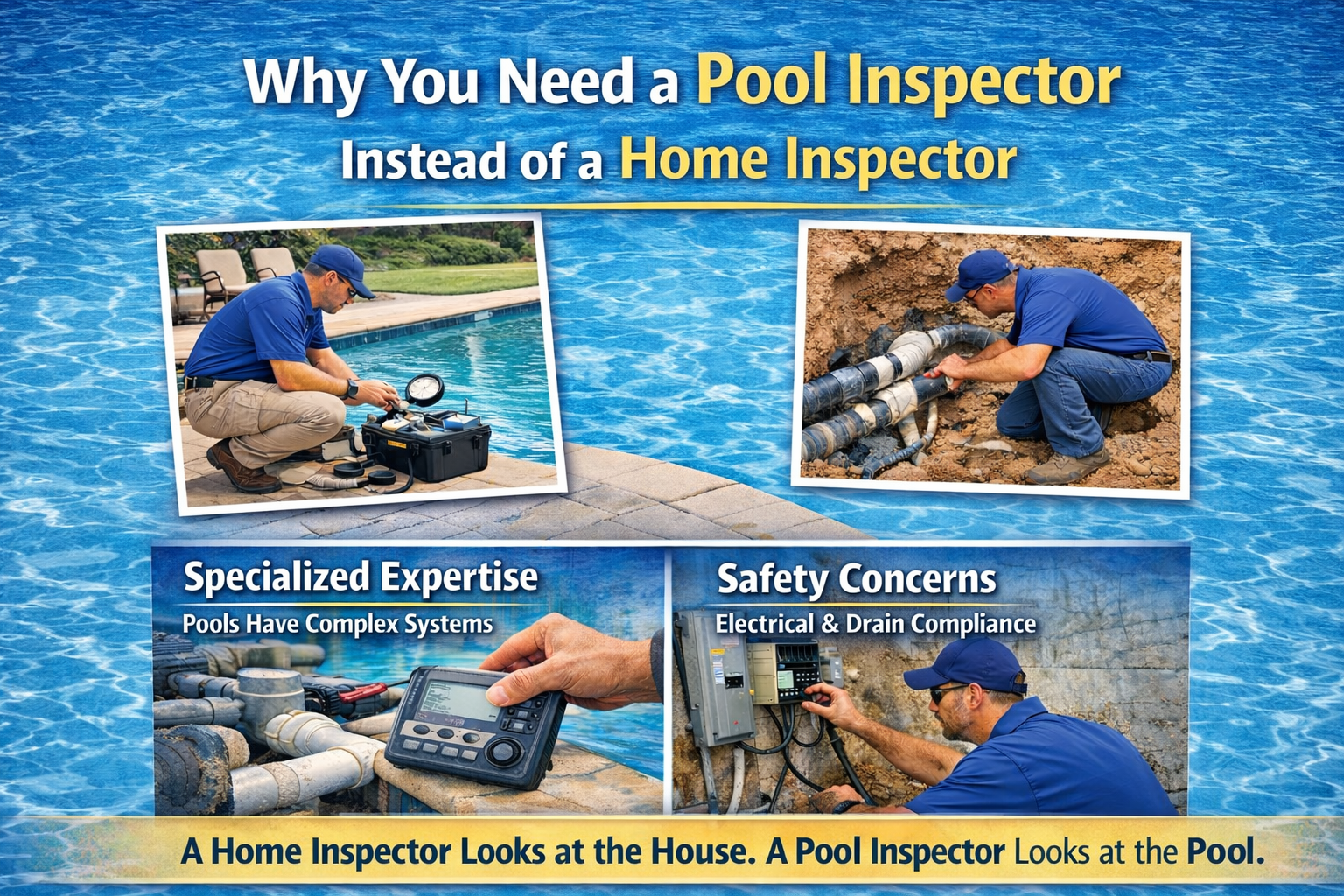
A swimming pool is not a simple add on. It is a combination of structural engineering, plumbing, electrical systems, hydraulics, and safety compliance. Home inspectors are trained to evaluate the house as a whole, not to deep dive into a single specialty system.
Pool inspectors focus only on pools and spas. They understand how circulation systems work, how surfaces fail over time, and how small issues can signal major underlying problems.
Most home inspection reports include a clear disclaimer about pools. Common language includes statements like visual only inspection or pool not fully evaluated. This is not negligence. It is a recognition of limits.
Home inspectors typically do not:
A pool inspector does all of the above.
A missed roof issue might cost a few thousand dollars. A missed pool issue can cost far more.
Common examples include:
A pool inspector helps you identify these before you own them.
Pools involve real safety risks, especially for families with children. Pool inspectors evaluate:
Home inspectors usually note obvious safety concerns but do not test or verify compliance in detail.
Pool professionals know how long equipment and surfaces typically last. They can tell you if a pump has one season left or five, whether plaster wear is cosmetic or structural, and if a heater repair is reasonable or a replacement is imminent.
This allows buyers to budget realistically instead of reacting to surprise failures.
A proper pool inspection gives you leverage. If issues are found, you can:
Without a pool inspection, problems often surface after the sale when your only option is to pay out of pocket.
A home inspector looks at the house. A pool inspector looks at the pool.
If a property includes a swimming pool, relying solely on a home inspection is a gamble. A dedicated pool inspection is a small upfront cost that can prevent large unexpected expenses, safety issues, and regret later.
When buying a home with a pool, treat it like the major system it is. Bring in the right expert for the job.



YOUR POOL & SPA PRO'S SINCE 1991
© 2025 Pool Inspections & Consulting, LLC. All Rights Reserved.
Powered By
Pro Pool Inspectors